New Article Published!
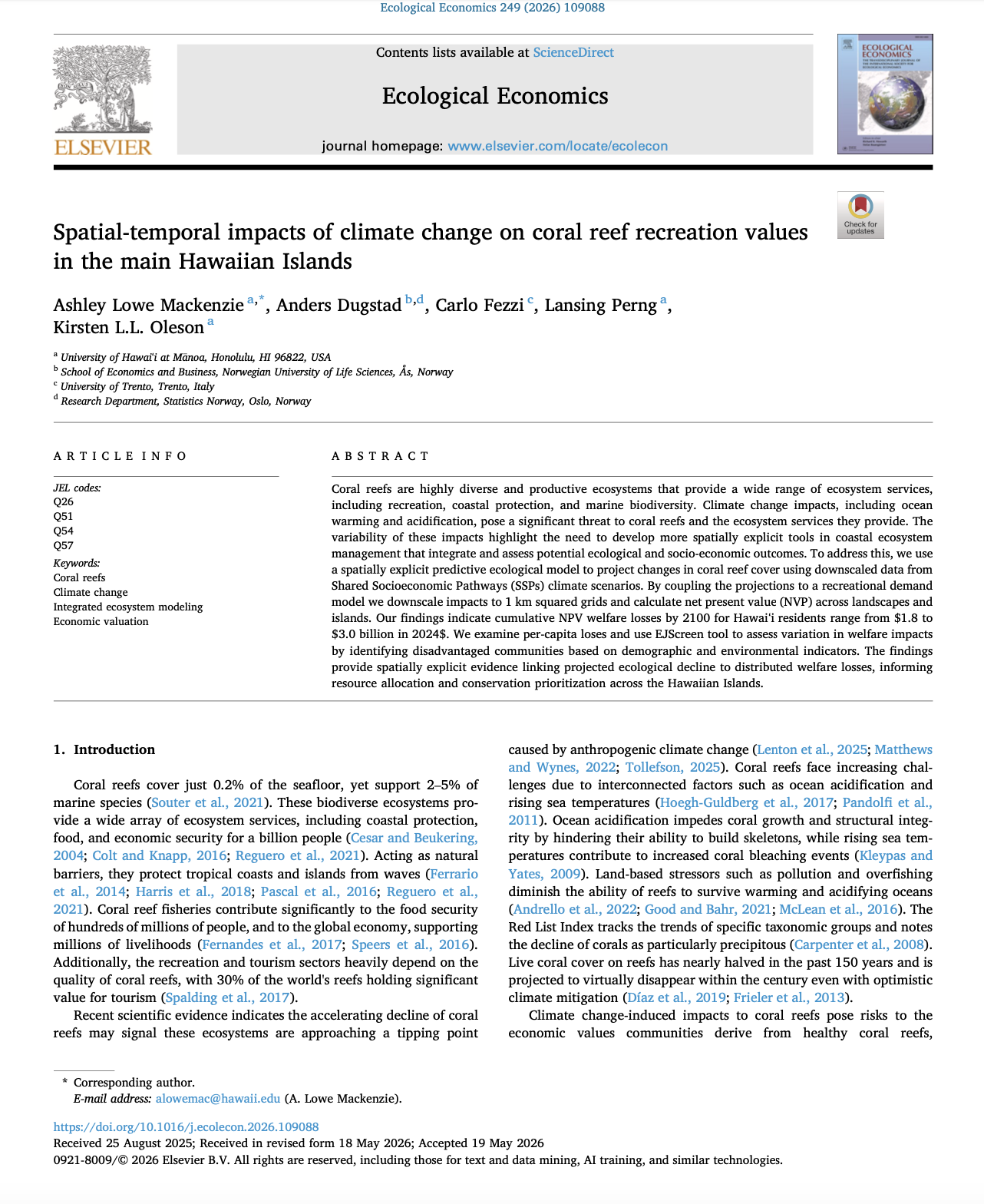
New article published in Ecological Economics. This work was conducted in the Oleson Lab with wonderful coauthors.
Abstract : Coral reefs are highly diverse and productive ecosystems that provide a wide range of ecosystem services, including recreation, coastal protection, and marine biodiversity. Climate change impacts, including ocean warming and acidification, pose a significant threat to coral reefs and the ecosystem services they provide. The variability of these impacts highlight the need to develop more spatially explicit tools in coastal ecosystem management that integrate and assess potential ecological and socio-economic outcomes. To address this, we use a spatially explicit predictive ecological model to project changes in coral reef cover using downscaled data from Shared Socioeconomic Pathways (SSPs) climate scenarios. By coupling the projections to a recreational demand model we downscale impacts to 1 km squared grids and calculate net present value (NVP) across landscapes and islands. Our findings indicate cumulative NPV welfare losses by 2100 for Hawaiʻi residents range from $1.8 to $3.0 billion in 2024$. We examine per-capita loses and use EJScreen tool to assess variation in welfare impacts by identifying disadvantaged communities based on demographic and environmental indicators. The findings provide spatially explicit evidence linking projected ecological decline to distributed welfare losses, informing resource allocation and conservation prioritization across the Hawaiian Islands.
The report is here! This year has been rough for many in research, science, academia, public service, environmental and conservation spaces, humanaities, immigrants, students of the world, people with empathy, people who want to breath clean air, drink clean water...the list goes on. The year proved to disrupt my work and life in many ways, my research agenda upended and my career rerouted. However, I am proud to be one of the dedicated researchers to have come together to finish the work even with the chaos that insued. The Nature Report is a comprehensive assessment of the state of nature in the United States, covering topics such as biodiversity, ecosystem services, and the economic value of nature. The report is now available for public comment, and we encourage everyone to read it and share their thoughts.
The report is open for public comment until May 30. The final version is slated for publication in late fall.
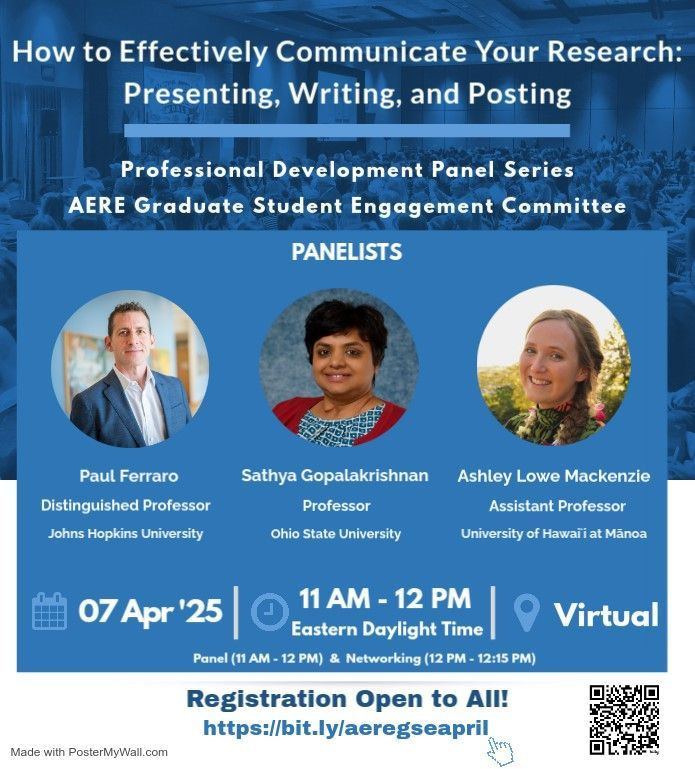
AERE Grad Student Engagement Panel: Master the Art of Research Communication
Master the Art of Research Communication
📅 Monday, April 7 | ⏰ 11 a.m. ET | 💻 Live on Zoom
The Graduate Student Engagement Committee invites you to an expert-led discussion on presenting, writing, and sharing your research more effectively.
🎤 Paul Ferraro (Johns Hopkins University)
🎤 Sathya Gopalakrishnan (Ohio State University)
🎤 Ashley Lowe Mackenzie (University of Hawaiʻi at Mānoa)
📌 Register now and take your research communication to the next level!
Joining the 1st Alt. National Nature Assessment ✊
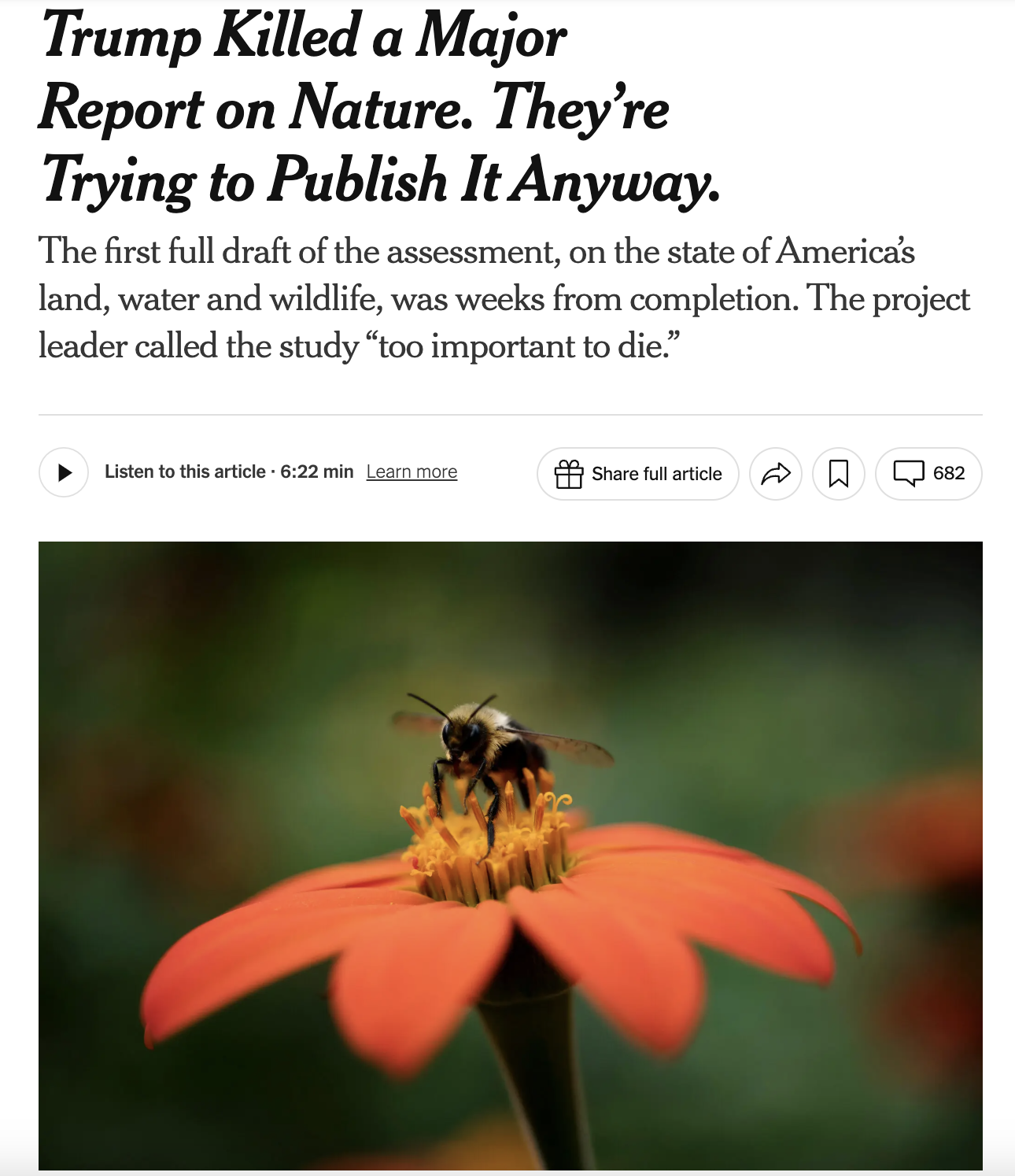
The first National Nature Assessment was cancelled through the Excutive Order Unleashing American's Energy on Janurary 20th, 2020.
However, I agree with Dr. Levin who stated “this work is too important to die,.....The country needs what we are producing.”
This is why I have joined the efforts of finishing the task with the other amazing coauthors. Viva La NNA1!
Where is the future direction of NNA? The honest answer is we haven't finalized it yet. We are exploring options but I am ready for the call to continue this important work.
Cancelled 2025 1st National Nature Assessment (Joined 2024) -
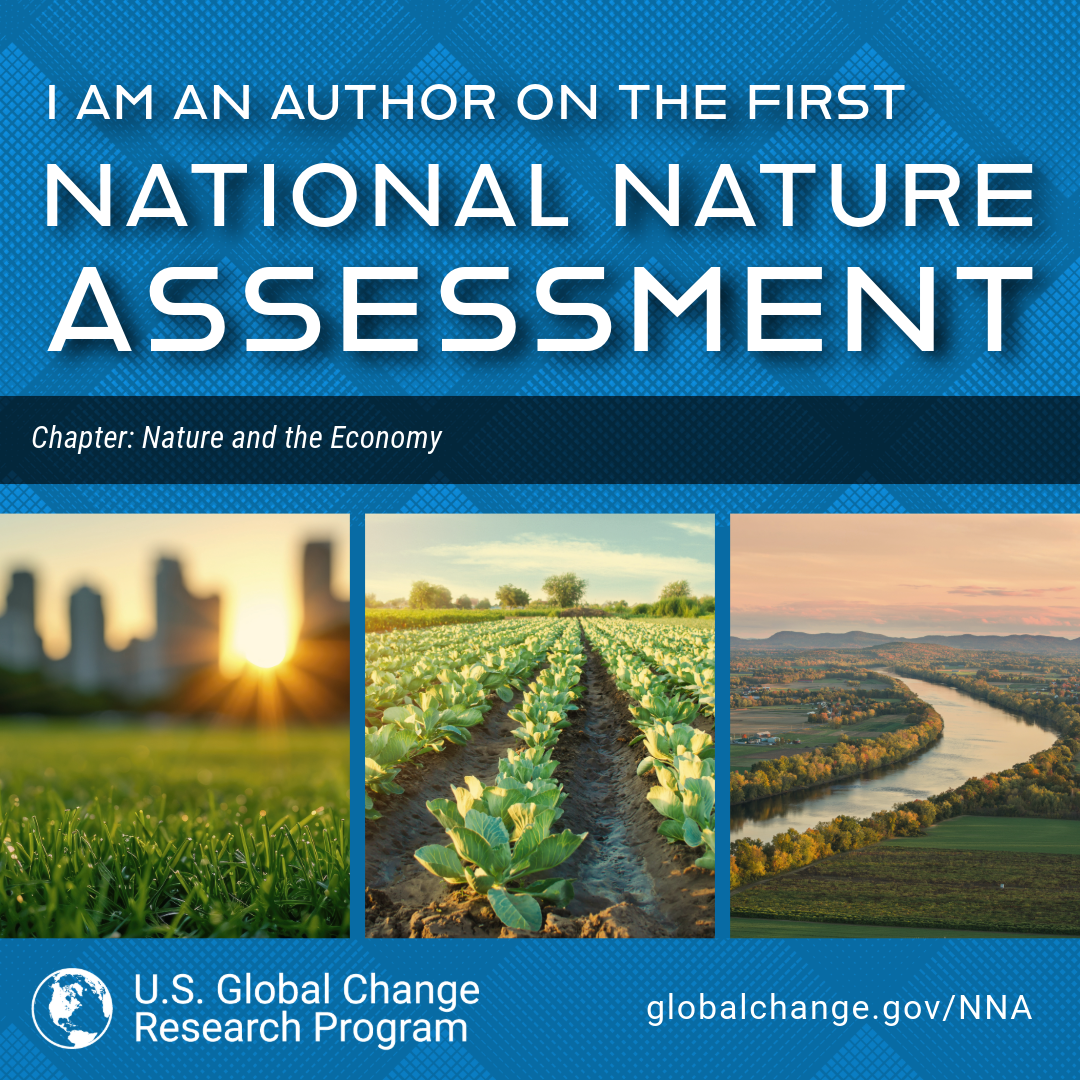
I am joining the NNA1 chapter entitled Nature and the Economy as one of the chapters author and graphic lead.
The U.S. Global Change Research Program is National Nature Assessment (NNA1). The diverse team that will number over 150 experts was selected by the
11 NNA1 chapter leads in consultation with federal leadership, based in part on a public call for author nominations. With the full author team in place, the writing phase of the NNA1 is now kicking off.
Over the next two years, NNA1 authors will take stock of what nature provides to us in terms of its inherent worth, our culture, health and well-being, jobs and livelihoods, and safety, and more, while looking ahead to understand how these benefits might change in the future.
#NNA1
Related Links:
• Read a blog by NNA1 Director Phil Levin, “A Nature Imperative on Earth Day,” for the White House Office of Science and Technology Policy
• NNA1 is also mentioned in the Presidential Proclamation on National Park Week, 2024
Media on Instagram & Public Lands Publication
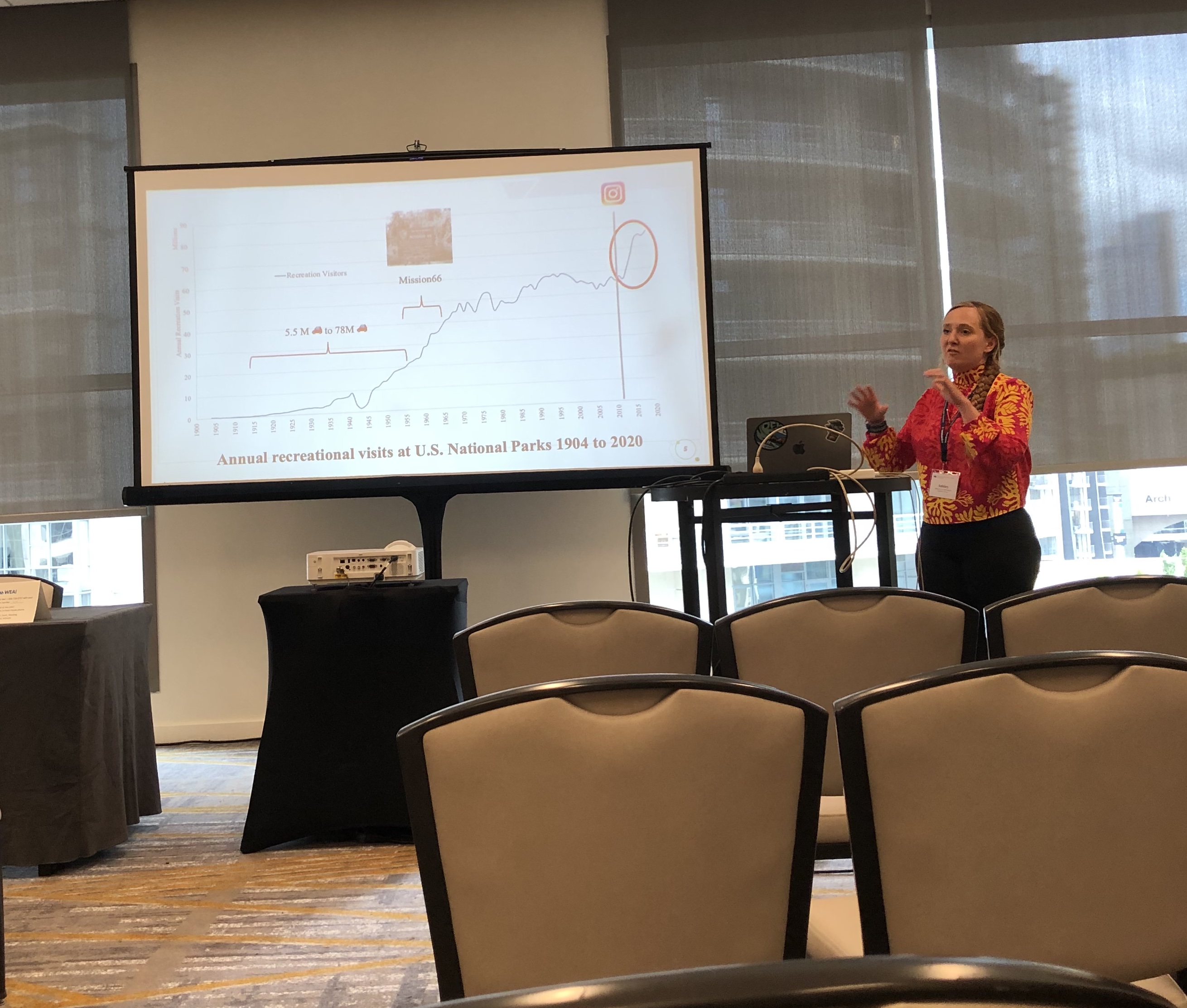
Land Economics The Instagram Effect: Is Social Media Influencing Visitation to Public Land?
Public lands in the United States have recently experienced significant increases in visitation. Journalists and park managers suggest Instagram as a reason for the increase. We explore this issue in the Oregon State Park system by combining visitation data with park-specific georeferenced content and engagement indicators from Instagram. Using several empirical specifications, we show suggestive evidence that Instagram is not likely correlated to increased visitation everywhere, but only in a few locations generating high user participation within the app. We find no contemporary effect and a positive association with cumulative Instagram engagement indicators on visits at this subset of parks.



Published Papers
Lowe Mackenze, L. Perng,A.,Dugstad A., C.Fezzi & Oleson K. (2026) Spatial-temporal impacts of climate change on coral reef recreation values in the main Hawaiian Islands Ecological Economics Code Data Methods
- Martins, I., Letschert, J., Koenigstein, S., Kluger, L.C., Blanz, B., Buchholzer, H., Espasandín, L., López, M., Mackenzie, A.L., Quiroga, E. and Suarez-Caballero, J.L., (2025). Sharpening resilience concepts to catalyze advances in marine social-ecological systems research. ICES Journal of Marine Science, 82(12), p.fsaf208.
Olsen, Michael J., Jon Allan, Steven J. Dundas, Maria Krivova, Ben A. Leshchinsky, Andrew Senogles, Joanie Herrmann, Christopher Parrish, and Ashley Lowe Mackenzie. US Highway 101 Coastal Hazard Vulnerability and Assessment for Mitigation Prioritization, Oregon Department of Transportation Project, Federal Highway Administration, Final Report
Lowe Mackenzie, A., S. J. Dundas, and B. Zhao. (2024) The Instagram Effect: Is Social Media Influencing Visitation to Public Land? Land Economics
Lowe Mackenzie, A., 2023. Understanding the New Outdoor Recreation Paradigm in the Era of Social Media and Increasing Public Health Advisories. Dissertation
Working Papers
Lowe Mackenze, A.,Dugstad A. & Oleson K. Unequal Recreational Losses? Revealed Preference Evidence of Campsite Closures in Hawaiʻi R & R Land Economics
-
Lowe Mackenze, A., Dundas SJ Is a Photo Worth 1,000 Likes? Visitation Modeling and The Influence of Instagram at National Parks
-
Lowe Mackenze, A., Dundas SJ & Dickson, C. The Effects of Public Health Advisories on the Value of Recreational Camping
The Nature Report: Chapter Nature and the Economy. CoAuthor & Graphic Lead (Chapter Lead: Rajat Panwar, CoAuthors: Pamela Bachman, Uris Lantz Baldos, Marc Berejka, Brian Buma, Y. Allen Chen, Jaana Korhonen, Theresa Lieb, Jakki Mohr, Stephen Polasky, Anthony Rogers, Randy Rosenberger, John Whitehead) Submit A Comment!
Work in Progress
- Multi-Destination and Multi-Purpose trips in Random Utility Model using Mobile Device Trajectory Data: Evidence from Hawaiʻi's Trail System : (Melissa Price, Kirsten Oleson)
- Non-market tourism values of coral reefs for the Hawaiian Islands
- Estimating the impacts of removing Oregon’s severance tax on large industrial timber harvesting in 1999.
Seminar
Forthcoming
- W5133 -Economic Valuation of Public and Private Land Feb 25-27 2026
- OREE -April 24th 2026
Past Presentations
- AERE Summer Conference ~ May 28-30 - New Mexcio
- AERE Graduate Student Engagement Committee Panelist Invitation ~ March
- W5133 -Economic Valuation of Public and Private Land March 7-8 2025
- Society of Benefit and Cost Analysis March 13-14th 2025 - DC
- Workshop on Energy and Environmental Research @ University of Hawaii : Spring & Fall 2025
- NREM Seminar @ University of Hawaii- Fall 2024
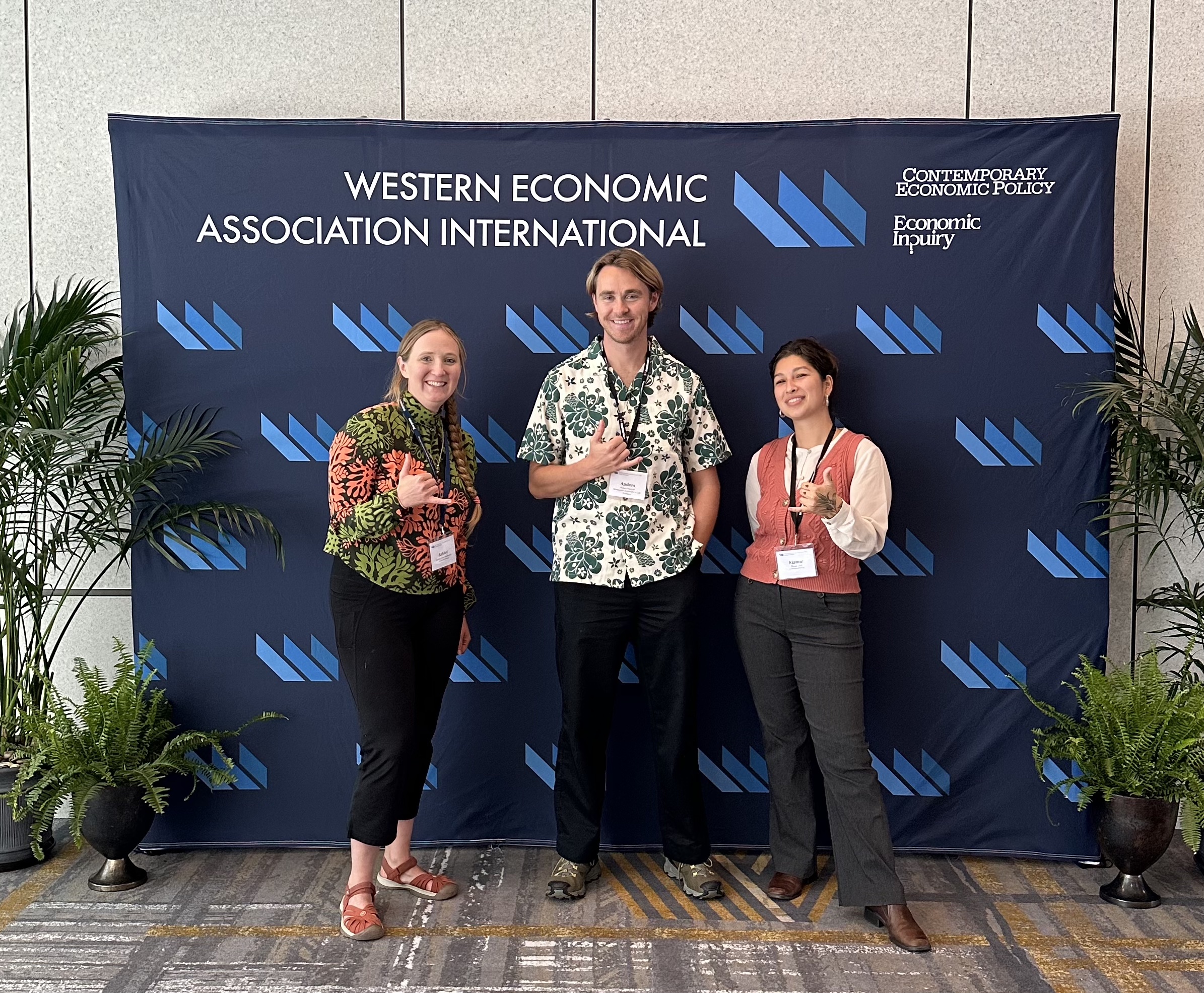
- AERE @ Western Economic Association International (WEAI) 99th Annual Conference - Summer 2024 - Section Big Data
- 2024 2nd Marine Socio-Ecological Systems Symposium - Summer 2024 - Section 5 Mapping human deminsions onto seascapes.
- Association of Environmental and Resource Economists - Summer 2024 - Section Recreation
- Workshop on Energy and Environmental Research @ University of Hawaii : Fall 2023
- Camp Resources : Summer 2023
- People and Nature at OSU 2020
Professional Services
Conference Abstract Reviews
- AAEA Conference
- AERE Conference
Journal Reviewer
- Environment and Development Economics Journal
- JPRA Reviewer Journal
- Tourism Geographies Journal
- PLOS ONE Journal
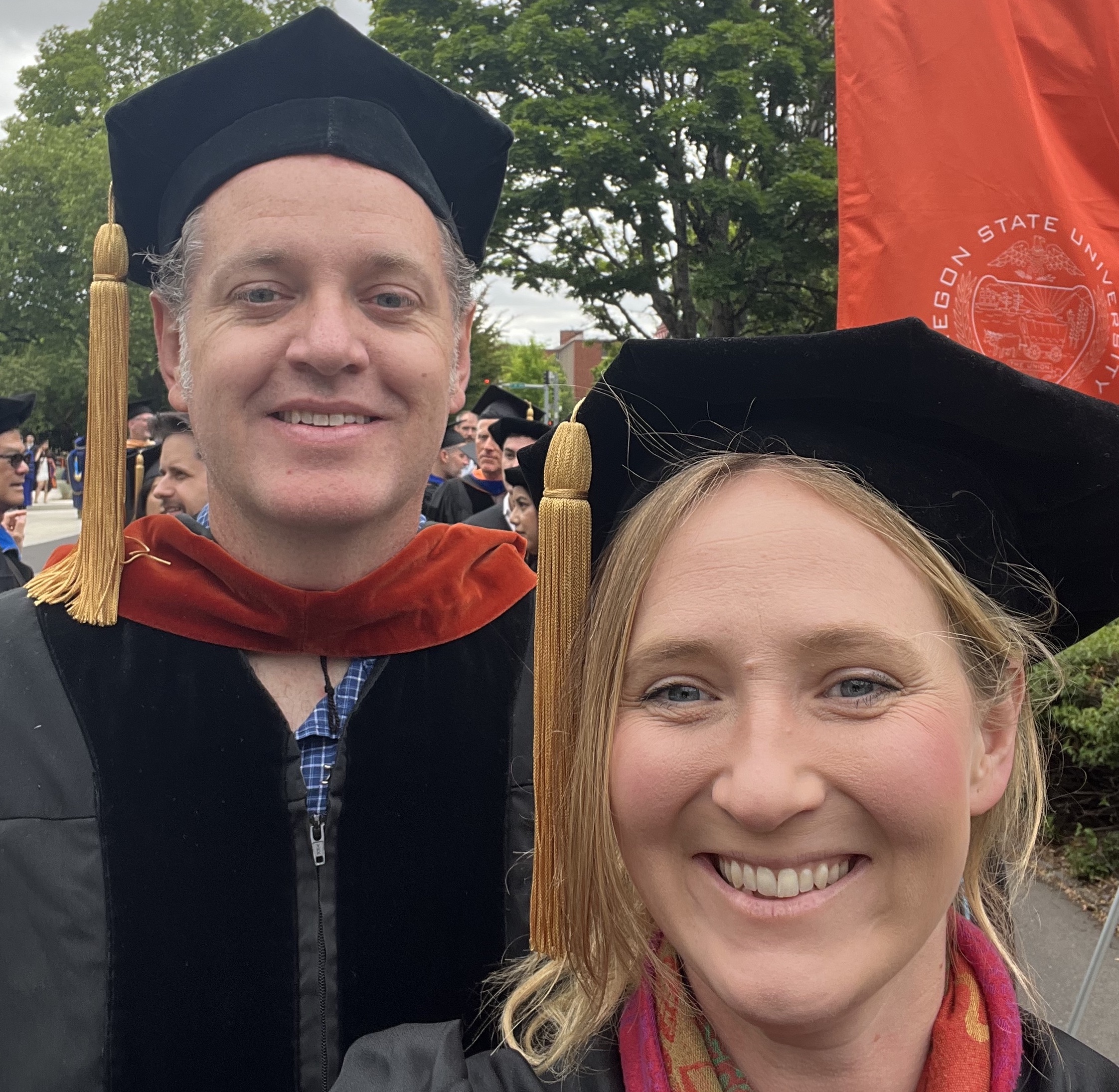
Alma Mater

Bachelor of Science in Economics (2011)
- Fields : Microeconomics, Macroeconomics, Econometrics, Game Theory, History of Economic Thought, Institutional economics, Comparative economics, Statistics
- Minor in Philosophy
Associate of Arts (2007)
- Developed interest in Economics


Programming
Languages







Developer Tools



 Google Cloud
Primary Environment
OS:


PS:



Vlog
Pacific Crest Trail
A northbound hike of the Pacific Crest Trail in a snow year.
Contact
